

Emily Singleton
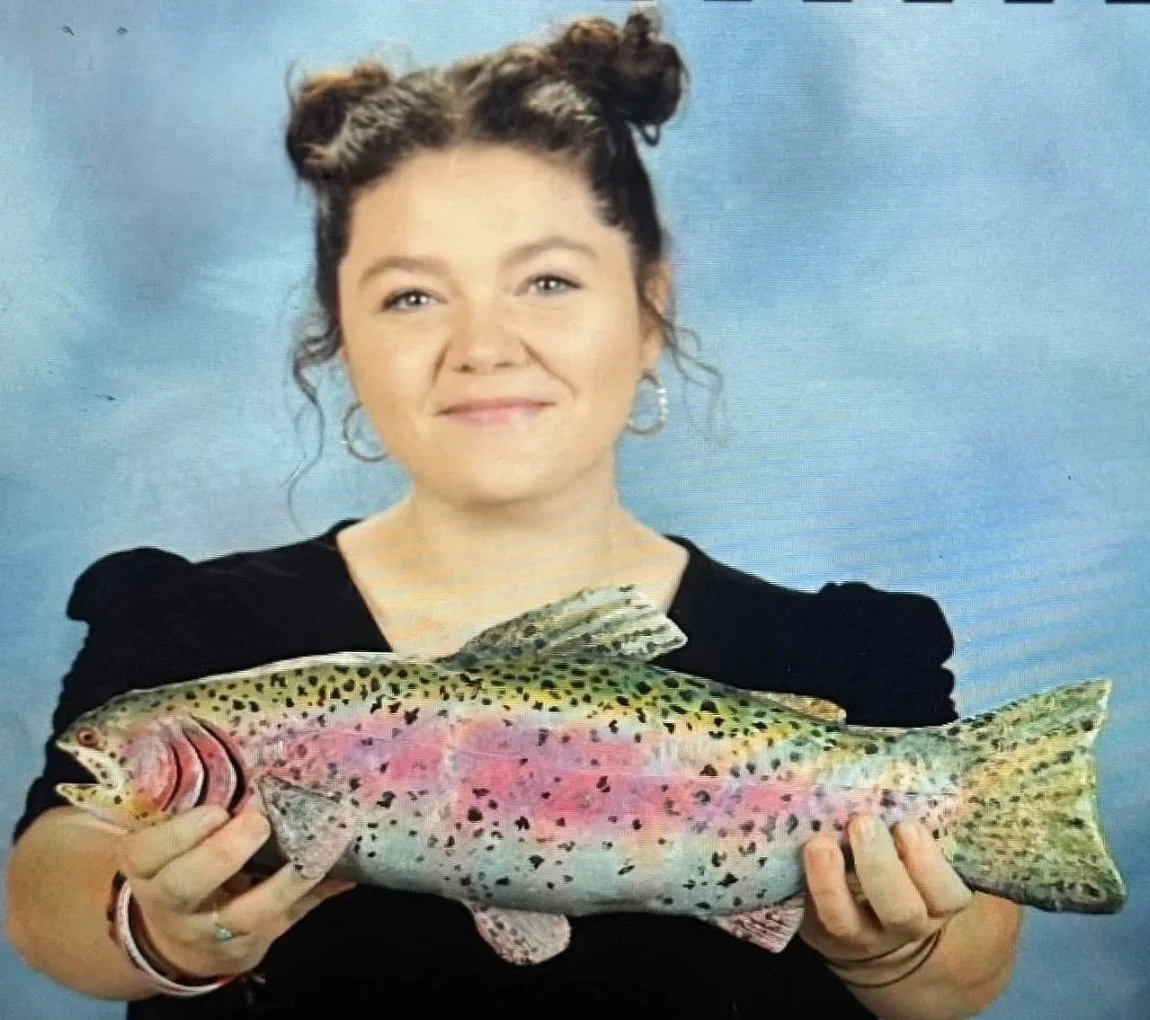
Emily Singleton is a visual artist and educator from Avery County, North Carolina. While primarily a painter, she is a lifelong learner with a deep curiosity for material exploration and sustainable processes. Growing up with limited financial resources, later teaching in underfunded Appalachian communities, and navigating life with ADHD have all shaped her approach to making. These experiences foster a creative resourcefulness that drives her process, encouraging experimentation while avoiding stagnation and boredom.
Emily's practice as a teaching artist spans from Title 1 Public Schools (elementary, middle, and high school classrooms,) residential foster homes, and the NC Juvenile Justice and Delinquency Prevention Program. She is deeply committed to sharing the healing power of the arts with young people, particularly those who are at-risk. She graduated magna cum laude from Appalachian State University in 2019 with a BFA degree, and began a graduate program in Art Education at Eastern Illinois University following the devastation caused by Hurricane Helene.
Emily's work has been on exhibition at the North Carolina Museum of Art, Cathy. P. Walling Gallery, Sawtooth School of Art, ARTLINK Fort Wayne, Blowing Rock Art and History Museum, Doudna Fine Arts Center, and Corgi Clay Studios. She has been featured in the publications 'Painting the Palmetto, a South Carolina Anthology' and in Appalachia Bare Magazine. Emily was selected to paint for Appalachian State's Permanent "Chancellor's Residence Collection" in 2018. She also contributed to the research behind "Reconceptualizing Early Career Teacher Mentoring as Reggio-Inspired" through a three-year collaborative research program contracted by University of Georgia’s Art Education Department and NAEA.
The Story Behind The Work
“My approach to this series was lead by a passion for waste reduction, but has turned into what I consider a collaborative process between myself and many young artists. During a week of teaching Eric Carle inspired lessons to my elementary school students, I found that painted paper scraps from their own collages were too precious to be considered trash. I began collecting them instead of throwing them away, studying their unique textures and colors, and found my own inspiration in creating. I carefully cut and glue each piece, collaging as if I'm using the paper to paint. I use portraiture as a way to make statements about the world, focusing on people who have made large-scale impacts on society.”